The Art of Troubleshooting Common Electric Motor Issues Explained
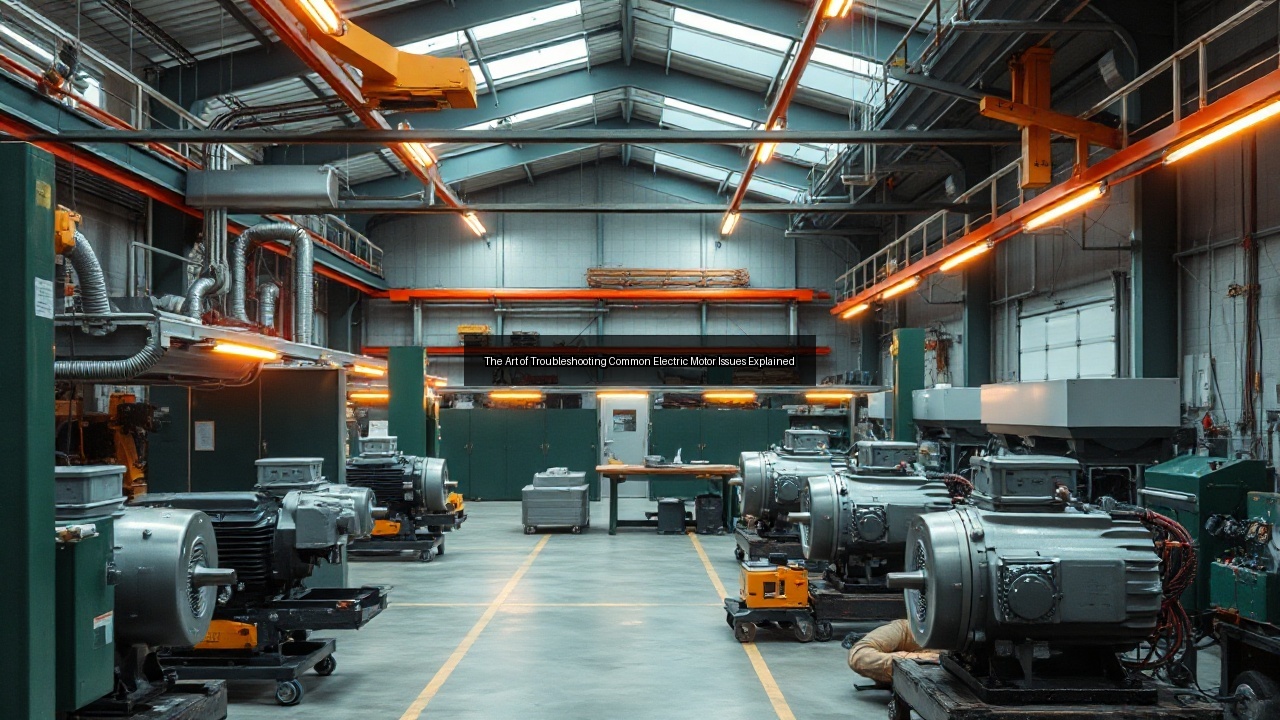
Understanding Electric Motors and Their Importance
Types of Electric Motors
Electric motors power countless systems with precision and efficiency. AC induction motors handle heavy loads in industrial settings through simple rotor designs that resist wear, relying on electromagnetic induction to generate torque without direct electrical connections to the rotor. DC motors deliver variable speed control ideal for conveyor belts and pumps by adjusting armature voltage or field current, offering excellent starting torque and reversible operation. Synchronous motors maintain exact speeds for timing-sensitive operations like printing presses and textile machinery, as their rotors lock in sync with the rotating magnetic field of the stator. Brushless variants reduce maintenance needs by eliminating commutators and brushes, instead using electronic controllers for commutation, which extends operational life in demanding environments such as aerospace and medical equipment.
Engineers select motor types based on torque requirements, voltage ratings, and environmental factors such as dust or moisture. For instance, totally enclosed fan-cooled (TEFC) designs protect against contaminants in mining operations, while explosion-proof motors meet stringent safety standards in chemical plants. Proper matching prevents premature failures and supports consistent performance across diverse setups. Understanding these distinctions guides effective electric motor repair when issues arise later, ensuring that replacement components align with original specifications for optimal efficiency and longevity.
Applications in Manufacturing and Automation
Manufacturing relies on electric motors to drive assembly lines, robotic arms, and CNC machines that produce goods at high volumes. In automotive plants, servo motors enable precise positioning for welding and painting robots, while high-torque induction motors power stamping presses. Automation integrates these motors with sensors and controllers to execute repetitive tasks without constant human oversight, creating seamless production flows that respond dynamically to demand fluctuations. Facilities upgrade older units to variable frequency drives that adjust speeds dynamically and cut energy costs by matching motor output to real-time load requirements.
This integration boosts output while minimizing downtime from mechanical stress. Technicians monitor motor performance during production cycles to catch early signs of imbalance or overheating, often using data loggers that track parameters like current harmonics and temperature trends. Such practices sustain productivity and reduce unexpected halts that disrupt supply chains, ultimately supporting lean manufacturing principles and just-in-time inventory systems.
Role of Electric Motors in Generators
Electric motors often operate in tandem with generators to convert mechanical energy into electrical power during outages or in remote sites. In combined heat and power systems, motors serve as starters for diesel or gas engines, ensuring rapid synchronization with the electrical grid. Backup systems use motors to start generator engines quickly and maintain stable frequency output, critical for data centers and hospitals where even brief interruptions can have severe consequences. In hybrid setups, motors recover energy through regenerative braking and feed it back into the grid, enhancing overall efficiency in electric vehicle charging stations and wind turbine nacelles.
This dual role enhances overall system reliability in power plants and emergency facilities. Regular inspection of couplings and bearings keeps both components synchronized, while thermal imaging identifies potential hotspots in connections. Operators schedule checks to avoid cascading failures that could leave critical loads without power, incorporating load bank testing to verify system readiness under simulated full-load conditions.
Common Electric Motor Issues and Their Symptoms
Identifying Mechanical Failures
Bearings wear out from continuous loads and contamination, producing grinding noises and increased friction that raises operating temperatures. In heavy-duty applications like crushers and mills, inadequate lubrication accelerates this wear, leading to spalling and eventual seizure. Shaft misalignment causes uneven stress on couplings and leads to cracked housings over time, often exacerbated by thermal expansion in high-temperature environments. Technicians inspect seals and lubrication levels first during electric motor repair calls, using borescopes to examine internal components without full disassembly. Overloaded rotors develop cracks that propagate under vibration, particularly in variable-speed applications where resonance frequencies may be encountered.
Early detection through sound and temperature checks prevents total breakdowns. Replacement of worn components restores smooth operation and extends service life without full unit replacement, often incorporating upgraded bearing materials such as ceramic hybrids for improved durability.
Electrical Problems: Causes and Effects
Insulation breakdown from moisture or overheating creates short circuits that trip breakers repeatedly, with partial discharge activity gradually eroding winding integrity. Winding faults produce unbalanced currents and reduce torque output noticeably, detectable through megger testing that measures insulation resistance to ground. Loose connections at terminals generate arcing that scorches components, leading to increased resistance and localized heating. Voltage fluctuations from the supply side stress windings and accelerate degradation, especially in areas with unstable utility power or extensive use of nonlinear loads like variable frequency drives.
Motor repair services test insulation resistance and continuity to isolate these issues accurately. Addressing electrical faults promptly avoids secondary damage to connected equipment and maintains safe operation, often involving surge protection devices and proper grounding schemes to mitigate future risks.
Vibration Analysis: A Key to Troubleshooting
Vibration analysis detects imbalance, looseness, and bearing defects before they cause catastrophic failure. Portable analyzers capture frequency signatures that point to specific problems like bent shafts or uneven rotor masses, distinguishing between mechanical looseness at 1x running speed and bearing defects at higher harmonics. Maintenance teams compare baseline readings against current data during routine checks, applying ISO 10816 standards to classify severity levels. This technique supports targeted electric motor troubleshooting instead of guesswork disassembly. Corrective actions such as rebalancing or realignment follow directly from the results. Facilities that adopt vibration monitoring report fewer unplanned stops and lower repair costs overall, integrating wireless sensors for continuous online surveillance.
The Troubleshooting Process
Initial Diagnostic Steps
Start by verifying power supply quality and checking for obvious damage like burnt wiring or deformed frames. Measure current draw against nameplate ratings to spot overload conditions immediately, using clamp meters to capture inrush and running values. Listen for abnormal sounds while running the motor at no load first, noting any changes when load is applied. Document all symptoms and operating history before deeper tests, including recent maintenance records and environmental exposure details. These steps narrow down whether the problem lies in electrical circuits or mechanical assemblies. Accurate initial assessment speeds up the entire electric motor service process and minimizes unnecessary parts replacement.
Utilizing Switchgear for Troubleshooting
Switchgear provides isolation points that let technicians de-energize motors safely for inspection. Contactors and breakers reveal trip patterns that indicate short circuits or ground faults, with time-current curves helping diagnose whether issues stem from motor windings or downstream loads. Thermal imaging of switchgear components uncovers hot spots from poor connections, while insulation coordination studies ensure protective devices operate selectively. Integration with motor control centers allows real-time monitoring of start-up currents and running loads. Proper use of switchgear prevents arc flash incidents during electric motor repair and ensures systematic fault isolation. Regular testing of these devices maintains their protective function, including functional testing of trip units and verification of control power integrity.
Importance of Gear Alignment in Motor Performance
Gear alignment directly affects load distribution and prevents excessive thrust on motor bearings. Misaligned gears create side loads that shorten seal life and increase noise levels, often leading to lubricant leakage and contamination. Laser alignment tools achieve precise positioning faster than traditional methods, measuring angular and parallel offsets to within thousandths of an inch. Technicians check soft foot conditions on motor bases before final coupling, correcting any distortion that could induce stress once anchor bolts are tightened. Correct alignment reduces vibration amplitudes and improves overall efficiency. Facilities that prioritize gear checks during maintenance see extended intervals between major overhauls, incorporating dial indicator verification as a backup to laser systems.
Repair and Maintenance Strategies for Electric Motors
Preventative Maintenance Techniques
Preventative maintenance includes scheduled lubrication, insulation testing, and cleaning of cooling fans to remove dust buildup. Teams log operating hours and environmental conditions to predict service intervals accurately, applying reliability-centered maintenance principles that prioritize critical assets. Infrared scans detect overheating connections before they fail, while oil analysis on lubricated bearings reveals wear metal particles. These routines catch minor issues early and avoid costly emergency repairs. Documented programs also comply with insurance requirements for critical equipment. Consistent application keeps electric motors running at peak output, often supported by computerized maintenance management systems that generate work orders automatically.
Repair Services: When to Seek Professional Help
Complex winding rewinds or rotor balancing require specialized equipment found only in motor repair shops, including VPI tanks for vacuum pressure impregnation of insulation. Professionals handle hazardous material disposal from old insulation safely, adhering to EPA and OSHA regulations. In-house teams should escalate when vibration levels exceed thresholds or electrical tests fail basic standards, such as polarization index values below 2.0. Timely calls to repair services prevent small faults from becoming major replacements. Certified technicians provide warranties on work performed. This approach protects investment in high-value electric motors, particularly those operating in continuous processes where downtime costs can exceed thousands of dollars per hour.
Restoration vs. Replacement: Making the Right Choice
Restoration makes sense for motors with intact frames and salvageable cores when repair costs stay below 60 percent of new unit price. Replacement becomes preferable for obsolete designs lacking parts or when efficiency upgrades justify the switch, especially under evolving energy regulations. Cost-benefit analysis includes downtime during electric motor restoration versus immediate availability of new models, factoring in potential production losses. Energy savings from premium efficiency units often recover costs within two years, supported by utility incentive programs. Decision frameworks weigh reliability needs against capital budgets, incorporating life-cycle costing that accounts for maintenance, energy, and disposal expenses over the equipment's expected service life.
Enhancing Reliability and Performance of Electric Motors
Regular Maintenance Practices
Regular maintenance practices involve quarterly cleaning, annual bearing inspections, and periodic alignment verifications. Teams replace filters and check foundation bolts to maintain structural integrity, preventing resonance issues that amplify vibration. Training operators to recognize early warning signs like unusual odors or speed variations adds another layer of protection, fostering a proactive maintenance culture. These habits build a culture of proactive care. Documented schedules ensure no critical task gets overlooked during busy production periods, often augmented by checklists aligned with manufacturer recommendations and industry best practices.
Automation and Monitoring Tools
Automation pairs electric motors with IoT sensors that stream temperature, vibration, and current data to central dashboards. Predictive algorithms flag deviations days before failure, enabling condition-based maintenance that optimizes resource allocation. Remote monitoring allows specialists to advise on-site staff without travel delays, integrating with enterprise asset management platforms. Integration with plant control systems enables automatic load shedding during anomalies. Facilities adopting these tools achieve higher uptime and lower maintenance expenses through data-driven decisions, often realizing ROI within 18 months through reduced unplanned downtime.
Improving Motor Efficiency Through Upgrades
Upgrades such as premium-efficiency motors and variable speed drives cut electricity consumption by 10 to 30 percent in many applications. Retrofitting smart controllers optimizes start-stop cycles and reduces inrush currents, while power factor correction capacitors improve overall system efficiency. Gearbox replacements with higher ratios improve torque delivery while lowering motor stress. These enhancements increase overall system reliability and support sustainability goals, contributing to reduced carbon footprints and compliance with international standards like IEC 60034-30. Payback periods shorten when combined with utility rebates for energy-saving projects, encouraging widespread adoption across industrial sectors.